

Now on sale14–15 October 2026·The Wanderers Club, Illovo, Johannesburg
--
Days
--
Hrs
--
Min
--
Sec
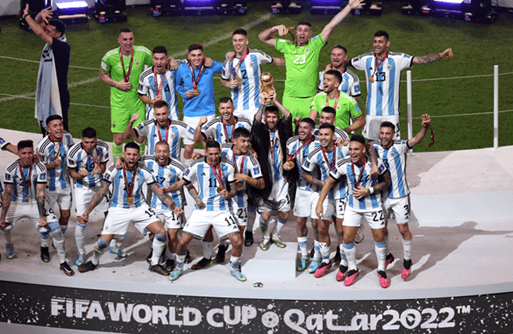
There is no doubt that the Qatar-hosted event, the 22nd edition of the FIFA World Cup has exceeded even the most optimistic expectations. The single-city event suddenly does not sound like that bad an idea, the limited travel for the teams gave them more rest, recovery, and training time, for the fans this was probably easier and excellent value for money, unpopular as it may have been for some the alcohol stadium ban perhaps created a pleasant experience for all and reduced the pressure on public order police and the violence that often mars these events. The football was spectacular not just for the extraordinary number of unexpected results but because it felt like the gap between the top nations and the rest has narrowed. The knockout stage was the most diverse in its regional compositions of participants and never in the tournament’s 92-year history have group stage winners come from 4 regions of the world with Africa, Asia, Europe, and South America all producing group winners. Commercially, preliminary numbers suggest it’s been a staggering success as a television spectacle with record audiences across all corners of the world.
So everything is fine then, right? No, because behind all that success lies some uncomfortable truths. FIFA published a vision document three years ago call it the manifesto for the 4 years to 2023 in which it states its ambition of Making football truly global as a core task for FIFA to pursue at every level. FIFA President Gianni Infantino states in his preface “The situation strikes me as fairly straightforward: a game that is so powerful and popular around the planet cannot be played at its highest level in only a few regions. “Our key mission is to truly globalise, popularise and democratise football for the benefit of the entire world.” This is what I mean with my vision for the period until 2023” he concluded. It is hard to argue with him.
Indeed, this is the game established on the foundational principle of fair play. The FIFA motto For the game For the world requires all of us to constantly ask whether what we do is to the benefit of the game and /or the world. This, along with fair play, is the standard against which FIFA and its leadership must assess all its actions. Is it consistent with fair play and does it advance world football for all?
As we close the Qatar 2022 chapter of this enduring football story it’s probably time we ask some questions about how this game and this event have been managed over the years. For starters can we continue to accept lopsided world cup slot allocations that have always favoured the Europeans and South Americans? Why should Europe still get 2.6 times what Africa gets when the two regions have the same number of FIFA members as the two biggest confederations? Why should a biased seeding system based on a flawed ranking system continue to be used when it only favours some and not others? Why should the developing football world accept that Europe still controls FIFA’s key organs of power for its benefit? The FIFA Council perhaps the single most important organ of power remains imbalanced in favour of Europeans who still have 3 FIFA vice presidents by design when all other confederations have one, as an example. All of this results in an oversized share of the economic benefits of the game going to Europe and South America including the world cup which is the single most powerful economic asset of world football. Of course, these regions are more developed so some of that is to be expected but what’s the fair differential?
FIFA exists to govern football and to develop the game around the world for the benefit of the entire world. (“FIFA”) Qatar has served as a timely reminder that indeed we are achieving this on some level but it’s also reminded us that underneath this veneer of unity and progress is a troubling injustice and bias that persist. It cannot co-exist with what FIFA stands for and represents. FIFA is not living up to this promise and falls far short of its founding principle of fair play. African and Asian football leaders inside FIFA must do more and demand more of FIFA. The facts, the moral authority and three-quarters of the world population are on their side.